
Publications
-webp(85)-o(jpg).webp?token=d963825a1ee836d09b0021bcf82c841c "With Armenia, I Was Connected by Dance")
Adaptation Through Dance
While listening again to the recording of my meeting with my new hero, I realized that Razmik is the youngest among those I have written about over the past three years. Despite his young age, he has already managed to demonstrate determination and courage more than once, as well as a willingness to initiate viable ideas. While the stories of some of my heroes are about the fact that it is never too late to return to the homeland, Razmik Avagyan’s story is about the opposite: it is never too early to start a new life at home.
Razmik was 13 when his family moved to Russia from Stepanavan: the difficulties of adapting to a new life became a reason for getting involved in the life of the local Armenian community. It was there that he found something that years later became the reason for returning home.
“To find a connection with Armenia, my sister and I signed up for groups at the community center: she chose dance, and I chose duduk lessons. I attended my sister’s classes a couple of times, noticed a girl there, fell in love with her, and decided to attend dance classes. The love that brought me to dance didn’t last even a couple of months, but it connected me with dance,” the hero recalls.
From Dancer to Teacher
The group, which performed stage dances with an emphasis on national ones, began to expand, and Razmik, who was successful in the group, was offered to train dancers for a new group. Every weekend, 18-year-old Razmik traveled from his city of Kaluga to Serpukhov to teach local children. And since he was unable to pursue a career as a lawyer in the years that followed due to health reasons, Razmik began to look differently at his dance skills: an activity that had been a hobby for several years seemed like a “place” where he could realize himself, be useful, and earn money: “I underestimated dance; at some point I thought that it was the only thing I never got tired of and that I wanted to grow in it. That’s when I started studying Armenian dances so I could answer the questions I was asked. That’s when I found a lecture by Gagik Ginosyan on YouTube, listened to it, and everything inside me turned upside down. I realized that I had been doing the wrong thing all along. Ginosyan’s ideology mentally transported me to Armenia; I contacted his daughter, and we agreed to meet in Armenia…”
Following the Ideology of Gagik Ginosyan
In August 2024, Razmik was already in Armenia with the decision never to leave again.
Knowing that his knowledge of ethnic dances was not perfect, he began working to improve it. Along this path, he met ethnic dance performer Amazasp Aslanyan, who took Razmik under his mentorship.
“Since I had come leaving everything behind, I needed to earn money. Ani Ginosyan suggested that I come to Yerevan, stay for 2–3 months, complete training, and receive a certificate, but that would happen the following summer. What was I supposed to do until then? That meant doing something else, but I didn’t want to be distracted from my main goal, so I decided to stay, take risks, make mistakes, instead of just waiting,” Razmik continues.
Creating the “Razmik” Dance Ensemble
He then decided to open a Facebook page and post an announcement about gathering young people for dance lessons. The first group of four people later turned into a full-fledged “Razmik” ensemble. Afterwards, the hero began working in the villages of Gyulagarak, Lori Berd, Lejan, and Yakhdan. In about a year and a half, Razmik already had around 200 students from Stepanavan and the surrounding areas.
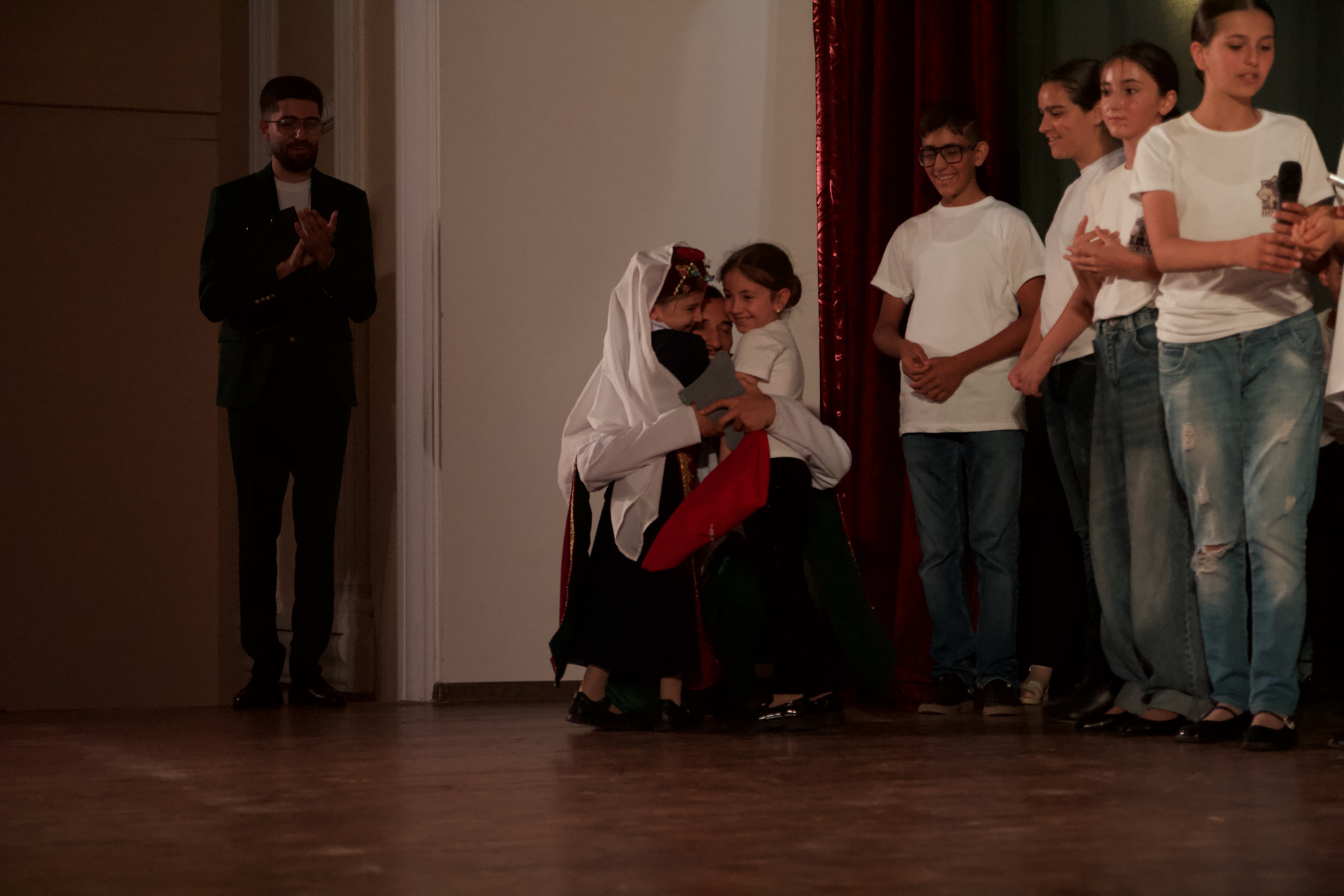
“In Stepanavan, young people intentionally go to ethnic dance classes; in the city, there is a choice between modern and national dances. In villages, there isn’t much awareness since there is no choice. But in the end, rural children and youth become more attached to dance and are more active. For example, in the village of Amrakits there are two boys to whom I want to pass on my knowledge and ensure continuity. Along with their dance abilities, they are proactive; for example, together with me they launched a Telegram channel and created a Telegram bot that works with it, and the channel is actively functioning, which is largely thanks to them,” Razmik explains.
The creation of dance groups in villages became the starting point for various initiatives, activating youth life and bringing shared ideas to life.
Razmik also has comfortable and productive cooperation not only with rural children and youth: according to him, he manages to find common ground with everyone. He does not try to change local youth, but it seems he manages to influence them. According to him, young men who once looked at their dances with distrust are now dancing yarkhushta together with everyone.
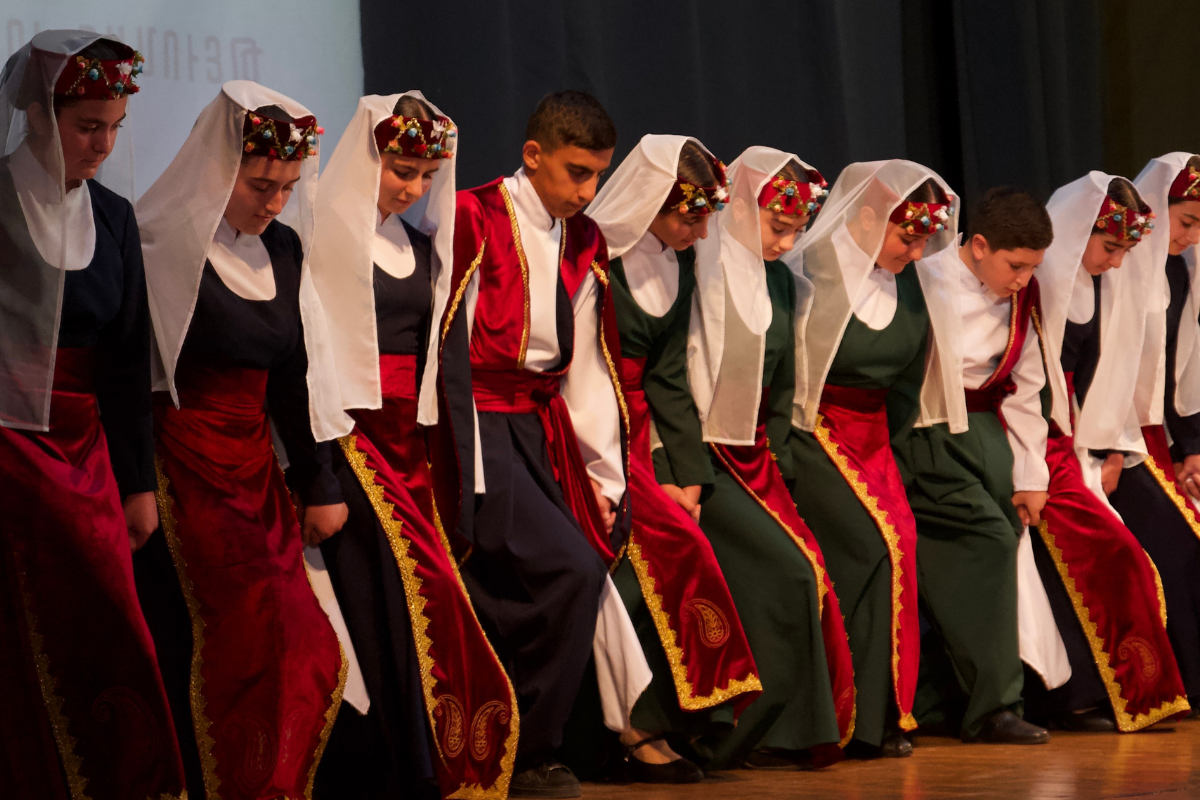
Everyone Should Dance
Alongside paid dance teaching, which helps the young repatriate sustain himself, Razmik also teaches on a volunteer basis: an amateur group, dance lessons at the Senior Center, as well as the project “I Can’t Dance”, whose goal is to teach anyone - even the most inexperienced dancer - simple movements and eventually gather them in the center of Stepanavan to perform one of our ethnic dances. The “I Can’t Dance” project also has a second important component: Razmik and his assistants from the amateur group document the entire process to popularize ethnic dances. The first season of five episodes is already complete, and work is underway on the second season. As part of the project, the dancers will travel to Javakhk to film Karin and Erzurum dances (as most Javakhk residents have roots from Karin and Erzurum), and to Ashnak to film Sasun dances (as Ashnak residents have roots from Sasun).
I Am Where I Should Be
“Dance is what connected me to Armenia, and I have never once felt that I was not where I was meant to be. I believe I should contribute to my country, rather than take a consumerist approach toward it. Catholicos Vazgen I once said that instead of complaining about the darkness, one should light a candle. Today, the homeland needs educated and cultured people who are ready to light their own candle,” Razmik concludes.
Interview by Nare Bejanyan
Translation via AI based on the original article in Russian: "С Арменией меня связал танец…"

-
Personal Stories
-webp(85)-o(jpg).webp?token=1061e01373cf47c49cff09d50714e892 "“Wherever you go, you will be outsiders, and Armenia is our home...”") 20.05.2026“Wherever you go, you will be outsiders, and Armenia is our home...”
20.05.2026“Wherever you go, you will be outsiders, and Armenia is our home...” -
Personal Stories
-webp(85)-o(png).webp?token=ca8511e7b8d4ea8094582bf0d2bedf36 "“I Like to Think That I Am a Small Part of Change”: Taron Sardaryan") 18.05.2026“I Like to Think That I Am a Small Part of Change”: Taron Sardaryan
18.05.2026“I Like to Think That I Am a Small Part of Change”: Taron Sardaryan
-webp(85)-o(png).webp?token=48ce58c1fc2187d0a08bd0f712259b83 "Only experience reveals the truth. — Ania Adjian")
-webp(85)-o(png).webp?token=2eae0b64335d852484e95f47b69a3ad8 "Հայրենադարձության, ներգաղթի և քաղաքական կամքի թուլության մասին")