
Publications
-webp(85)-o(jpg).webp?token=c3cd2801824d76c1670124f9fe257e52 "Transformation Through Repatriation: The Journey of Anush Zeynalyan and OCHRE")
What model could allow an artistic organization to remain financially stable through commercial activities while integrating artistic objects into everyday life? The answer – and later the result of its practical implementation – became the project OCHRE by repatriate Anush Zeynalyan.
Anush is a museologist by education. She was born and spent most of her life in Moscow, worked in the field of contemporary art on international projects, engaged in fundraising, and immediately before relocating headed the development department of the National Centre for Contemporary Arts. Anush moved to Armenia to develop a foundation supporting contemporary artists, and now works on developing the creative enterprise OCHRE.
Life in Moscow and Moving to Armenia
“Every summer before moving, my sister and I spent time in Armenia, in Hoktemberyan. My childhood in the 1990s took place between life on the outskirts of Moscow for most of the year and a small part of it—summer—in Hoktemberyan. Moscow at that time was not the most pleasant place to live. It was a difficult time for Armenia as well, but being a child here was absolute happiness. I think that feeling sits deep inside, and later other feelings layer on top of it—those connected with Moscow, very basic ones: little sunlight, an acute sense of insecurity, the feeling that anything could happen to you and your rights were not protected. All this, along with other factors, influenced my decision to move. It was a move from Moscow, and it was a move to Armenia. A double stroke of luck, a luxury nowadays,” Anush recalls.
A New Reality and the Creation of OCHRE
Anush began her repatriation process in 2016 and until her final move in 2020 lived between Yerevan and Moscow. The first year was difficult—one of the hardest in her life—because before that she had known only one reality, the one she lived by in Moscow. Learning another reality, many other ways of living and understanding what is normal, took about a year. Along with the difficulties, it brought many revelations.
Five years ago, Anush Zeynalyan founded OCHRE, which she now develops. It is a creative social enterprise that combines commercial activities—creating everyday objects together with artists and artisans—with nonprofit work studying artisanal traditions practiced by Armenians.
“When creating OCHRE, our starting point was Gyumri. Over time, our base in Gyumri expanded northward toward Amasia and Lake Arpi. For us, this route is still fundamental—we travel there when developing new projects with new partners, sometimes several times. It’s like embroidery—many repetitions create the possibility of recognition and, over time, freedom, the freedom to deviate and do something new.
So when we created our enterprise, knowing Gyumri was our foundation, we began studying the various industries that had developed there, and that’s how we came to textiles—and wool in particular,” she continues.
Wool is an amazing material: one of the most environmentally friendly natural materials, capable of lasting decades, warming in cold weather and protecting from overheating in summer. It is part of our material culture, and today it is the only material whose full production cycle takes place in Armenia.
The Vision of OCHRE
In its first collections, OCHRE created blankets conceived by contemporary artists and produced in collaboration with craftspeople in Armenia. Then, following the artists’ interests, the team turned to embroidery:
“We began studying different schools and traditions of embroidery, and we became captivated by the Ourfa embroidery technique. It started to take a large place in our work, and this was our first such experience because we had never before created objects in the context of studying a specific tradition. We initiated a joint project with the École des Arts Décoratifs in Paris, together with professors and students of the school, as well as artists from Armenia—Anush Gukasyan and Alexey Manukyan—and embroidery artisan Maral Sheumelyan. We are studying this tradition and reinterpreting it through new forms. As a result of our research, we will create a textile piece based on a collaboratively designed sketch. The work will be presented in Yerevan and in Paris in 2026.”

To implement its nonprofit projects OCHRE is constantly searching for funding and does so partly through its commercial projects—this model of self-sufficiency was built into the concept from the beginning. In collaboration with Anush Gukasyan and Maral Sheumelyan, with whom OCHRE works within the large project with the École des Arts Décoratifs, they created and released the “Grains” collection, adding ceramics as well—the main material Anush Gukasyan works with. The collection is available on the website and will soon be presented at several Armenian and international platforms.

“I am a museologist by training and for five years studied how to recognize different eras and worldviews through the objects around us. It’s an interconnected process: what we see and hear every day influences how we think. We engage in commercial activity not only to have a sustainable financial model, but also to create objects that become part of people’s lives and shape them.
At one exhibition I read the words of Italian artist Gino Bonichi, who said: “And the eyes will see other things, and other thoughts will be born.” This phrase describes how we see our path,” Anush shares.
Repatriation: Personal Experience and Emotions
Her personal experience and emotions from repatriation and life in her homeland are as deep as the vision and principles on which OCHRE was built.
The process of transformation continues: Anush has a complex identity that she has accepted and that over time feels like an advantage.
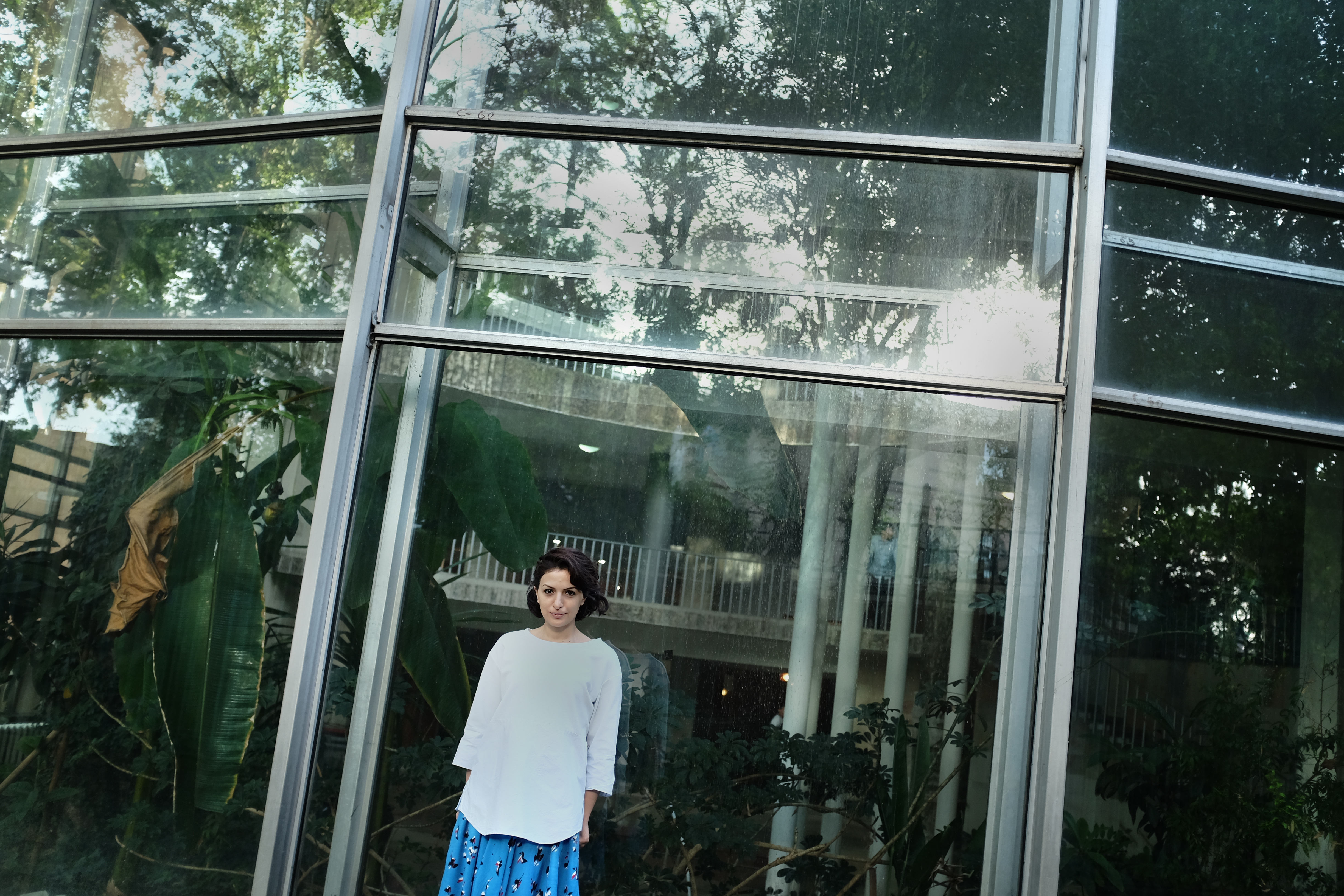
Reflecting on the past ten years and her repatriation experience, she admits:
“In 2023, during the situation with Artsakh, I realized that Armenia is, in a sense, a religion for me. At that moment I felt like I was losing my religion… I have boundless faith in Armenia, and I think we are living in a unique historical moment when it is possible to do something that will influence the course of the future.”
Translation via AI based on the original article in Russian: «Трансформация через репатриацию: путь Ануш Зейналян и OCHRE».
Interview by Nare Bejanyan

-
Personal Stories
-webp(85)-o(png).webp?token=fb92bc0bba5ca9f304a7d6d7f9e5284a "Repats Without Restraints - 12 Questions with Serine Petrossian") 27.02.2026Repats Without Restraints - 12 Questions with Serine Petrossian
27.02.2026Repats Without Restraints - 12 Questions with Serine Petrossian -
Practical Tips
-webp(85)-o(png).webp?token=d92fee26fe94722600393448f07de612 "Arriving in Armenia: How to Exchange Money at Zvartnots Airport Without Overpaying") 25.02.2026Arriving in Armenia: How to Exchange Money at Zvartnots Airport Without Overpaying
25.02.2026Arriving in Armenia: How to Exchange Money at Zvartnots Airport Without Overpaying
-webp(85)-o(png).webp?token=339120d84b4fffad516cdf16da05e78f "To Frankfurt and Back Again: Returning to Armenia")
-webp(85)-o(png).webp?token=0f42b0b6495e56f8d4c718a8194ddb85 "Repats Without Restraints - Candid with Ara Yeramian (Part 2)")