
Publications
-webp(85)-o(png).webp?token=013c540309240e50675958b71ed33f0b "Repats Without Restraints - A Chat with George Avakian")
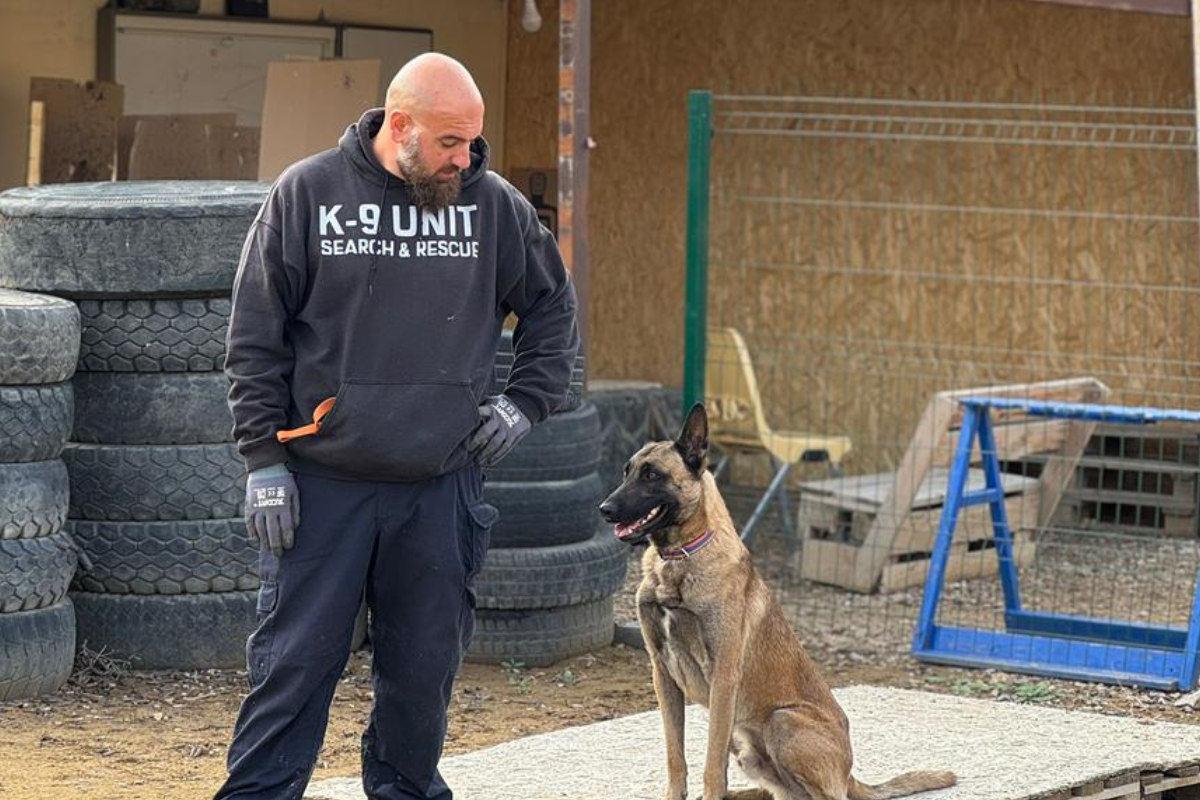
"We can judge the heart of a man by his treatment of animals," or so goes the saying by Immanuel Kant. That quote applies directly to George Avakian, the subject of this Repats without Restraints article. I first met George at a veterinary clinic in Yerevan, before a mutual friend hired him to train our dog, Bambi. What George and his team are doing in Armenia, particularly in the middle of heated debates concerning animals and stray dogs in the country, is a mission not to be taken lightly. That's why I decided to sit down with George and have a canine, candid conversation.
1. You've built a career around training K9s and rescue dogs in the United States. What first inspired you to get into this field, and what eventually brought you to Armenia?
I actually only began training professionally here in Armenia. In the US, it was just a hobby that I had for decades while working in the commercial real estate and music industries. I dove deep into it, spent thousands on schools and seminars but never thought it would be put to any kind of good use.
When I came here during the war in 2020 for humanitarian aid projects, I noticed that we didn't have any search and rescue canines and people were digging through sand with excavators looking for survivors. Our posts didn't have patrol K9s that could alert the boys of incoming threats or mine dogs to alert when they come across a live mine.
So, when I went back to LA at the end of the war, I made it my life's mission to move here and start building the canine culture by training dogs, educating people about dog training and starting Armenia's first volunteer civilian search and rescue K9 team. Along the way, I met Serge (my partner in training), my wife and the rest of our team of people who are passionate about training dogs to save lives.
We also got lucky by having two of the world's top SAR dog trainers training us for two years. So, we're now known worldwide as Search and Rescue Dogs of Armenia.
The next time there's an earthquake or bombing and these big brick buildings come crashing down on us, we can be ready to deploy and rescue living survivors and victims within MINUTES.
2. Search-and-rescue K9 units can make the difference between life and death during disasters. Looking back at the 1988 Spitak earthquake, do you think more lives could have been saved if Armenia had more developed rescue dog units at the time?
Interestingly enough, the way rubble searches are organized and deployed today is a direct result of the Spitak earthquake because for the first time ever, search teams from all over the world brought their dogs to try to find missing victims trapped under the rubble.
The Red Cross had to coordinate dozens of search teams, supplies, travel, medical aid and support coming in from all over the world at a time when the world's geopolitical situation was at a peak. Mind you, this was 1988 USSR and things weren't great here. They learned a lot about operational security, organization structure and international coordination. We, as a nation, didn't learn much. I've heard numerous stories of locals getting in the way of search dogs doing their jobs or stealing their food. So, there's that.
In fact, the International Search and Rescue Dog Organization specifically traces part of its origin to lessons learned from the Spitak earthquake. The event changed the way search missions are operated forever.
And like that…Armenia never had its own volunteer civilian search and rescue dog team until recently. More lives could have been saved then but EVEN MORE is at stake today! With the rise of construction all over the nation and a notorious history of fault line activity, Armenians need to take earthquake safety and disaster preparedness more seriously.
Get out here and volunteer your Sunday mornings. Hide as a victim for our dogs to find you!
3. What are some of the biggest differences you've noticed between working with K9s in the U.S. versus Armenia, whether it's training culture, public awareness, infrastructure, or even the dogs themselves?
Public awareness and environment are two of the greatest challenges. People here have so many misconceptions about dogs and so many urban legends. All we can do to help that is educate and make information accessible.
The streets here are so unsafe and hazardous sometimes. Trash everywhere, construction debris, slippery surfaces, everything wants to hurt you…even the weather makes it challenging.
Over the years, I have learned how to minimize the stress on myself and on the dog and on their handlers so that the environment becomes a training tool rather than an obstacle.
Then comes people's mindset. The way people think here changes how much pressure you can put on an owner to practice and work with their dog. There's this misconception that as a dog trainer, I just train the dog and get paid and never have to teach a person anything because they already know everything about everything. In reality, 90% of my work is with the handler.
4. You work with highly trained dogs in intense situations. What's the funniest, weirdest, or most unexpected thing a rescue or working dog has ever done during training?
For some of our more seasoned dogs, we stage real life scenarios with "injured or unconscious" people for them to find. One of the things that cracks me up and makes my heart smile is the moment when a dog realizes its purpose…"this person is in need of help out here, injured, all alone, and I found her! I can help get my humans to help her!"
And all of a sudden the search itself becomes the reward for the dog. Their body language changes…they feel concerned for the victim yet happy they found them. I'm 100% certain my dog understands what he's searching for when I send him out into harm's way.
5. Armenia is still developing in areas like rescue response and professional K9 handling. What kind of potential do you see here, and what would you love to help build or improve in the future?
So, this is why I'm here. I see huge potential everywhere here (SAR, border control, police dogs, etc.); but the only things missing are education, a culture of professionalism and dedication to hard, grueling work (and a salary that reflects it).
The laws pertaining to animals are also starting to change, and I am extremely grateful to every single person who is actively involved in the shaping of Armenia's modern understanding of dog culture.
Through the SARDA foundation (once we secure funding), we want to build an academy for professional dog trainers, breeders, handlers, vets, private owners and enthusiasts that can educate people on canine ethology, psychology, behavioral sciences, training methods and generally offers reliable professional development for anyone who is going to work with dogs.
Then, we can start focusing on community-level training and development for disaster preparedness and emergency response. I think back to my time in elementary school in LA and we spent a lot of time learning about earthquakes, what to do when disaster strikes, what the procedure is for evacuating a building, first aid, survival basics, etc…do we have any of that kind of education for kids in Armenia? If my dog found a kid under a pile of rubble, is that kid going to know that Tesla is there to save him? Or will he defend himself from the dog by hurting him? These are all things that need to be carefully taught so we're all prepared when disaster strikes.
6. On a lighter note, if you had to trust one breed to survive the Armenian mountains, harsh winters, and total chaos during an emergency, which dog breed are you picking and why?
My Belgian Malinois, no doubt about it. My Gampr (Aryudz, RIP) traveled the entire country with me. From the -30 cold of Karaberd to the +42 asphalt streets of Yerevan, she worked well enough most of the time, but not efficiently. The chances of injury and exhaustion were plenty. Tesla, the Malinois, is a well-rounded and balanced dog that works well in any terrain and under any amount of pressure. He'll never have the intellect of a Gampr, but I trust him with my life every single day out here in this rugged world we call Հայրենիք.
I really want to thank you from the bottom of my heart for highlighting SARDA. The work we do is painful, emotionally exhausting, stressful and usually life-threatening. We don't get paid for it and we self-fund most of SARDA's projects. It's thankless, unforgiving and absolutely chaotic. Eventually, I'll burn out. However, if what we've been working on with SARDA on an institutional level saves even just ONE life in the future, it makes it all worth it to me.
If any individuals or organizations would like to donate to the search and rescue Dogs of Armenia, please get in touch!

-
Opinions
-webp(85)-o(png).webp?token=f0be9df654f101cffc4384fd9dae7b3f "Armenia Votes on June 7: A Factual Guide for Repatriates and Diasporans") 02.06.2026Armenia Votes on June 7: A Factual Guide for Repatriates and Diasporans
02.06.2026Armenia Votes on June 7: A Factual Guide for Repatriates and Diasporans -
Personal Stories
-webp(85)-o(png).webp?token=b154fb4a1ea31c6a26b34bf37c2fdb5c "Repats Without Restraints - Getting Philosophical with Karapet \"Karo\" Sahakyan") 27.05.2026Repats Without Restraints - Getting Philosophical with Karapet "Karo" Sahakyan
27.05.2026Repats Without Restraints - Getting Philosophical with Karapet "Karo" Sahakyan -
Personal Stories
-webp(85)-o(jpg).webp?token=1061e01373cf47c49cff09d50714e892 "“Wherever you go, you will be outsiders, and Armenia is our home...”") 20.05.2026“Wherever you go, you will be outsiders, and Armenia is our home...”
20.05.2026“Wherever you go, you will be outsiders, and Armenia is our home...”
-webp(85)-o(png).webp?token=48ce58c1fc2187d0a08bd0f712259b83 "Only experience reveals the truth. — Ania Adjian")