
Publications
-webp(85)-o(png).webp?token=1ba3fe9fde2ec1cacbcdf3266f4598cf "Life Without Fear of Assimilation: Ari Hadjian’s Journey Home")
I met my new protagonist, Ari Hadjian, almost ten years ago, when together with a group of like-minded people from the charitable organization "Help the Children of Armenia," we were raising funds to build a football field in the village of Nor Kyank in the Ararat region. Back then, I received a message on Facebook from Ari expressing his desire to join the project: he and his footballer friends from Argentina made a significant contribution. We also planned to meet in person — it was very important for me to see his little twin sons, Arame and Menua, who had already captured my heart. In the end, our meeting only took place eight years later at the Repat Armenia office, where we talked about his sons, architecture, repatriation, and the difficult choice between Armenia and the diaspora.
Ari — a representative of the Armenian professional community of Buenos Aires
Ari was born in Buenos Aires, into a family representing the Armenian intellectual class: his father was a writer and the director of a local Armenian school and magazine, and his polyglot mother taught Armenian language and literature at the same school.
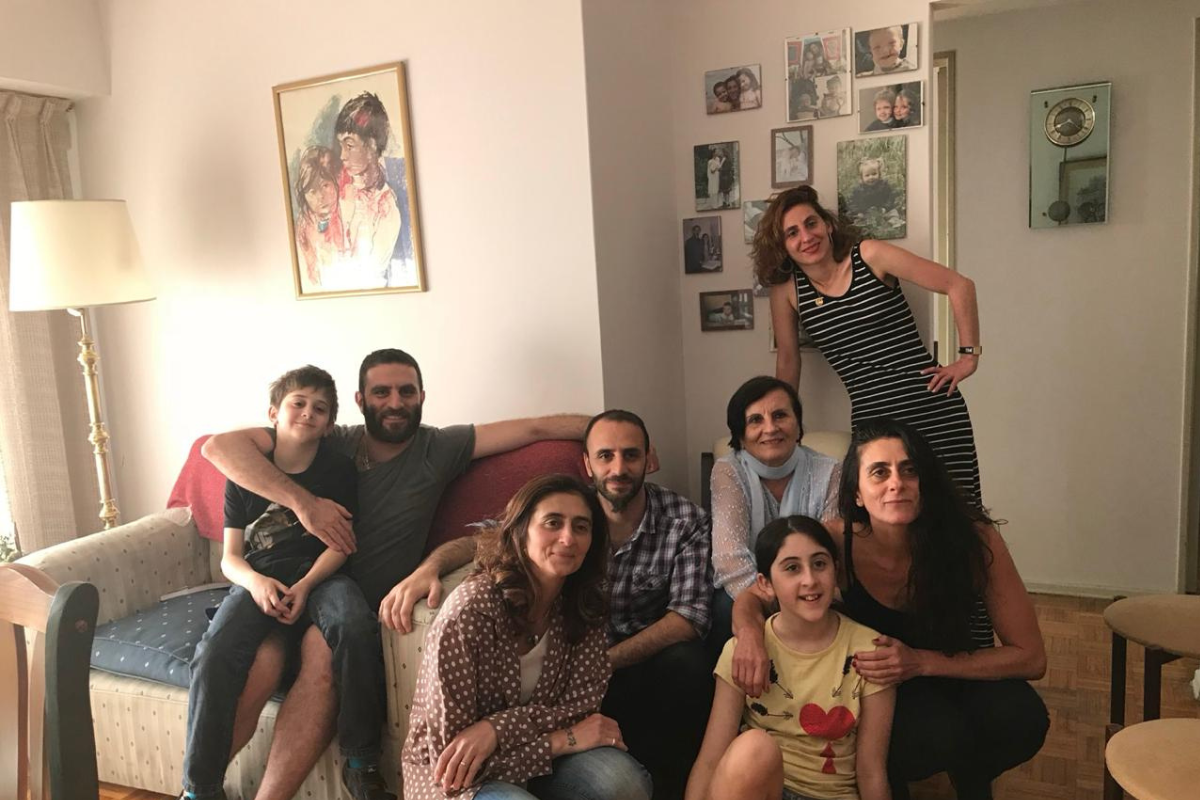
"Of course, we attended an Armenian school, and we spoke our native language at home. But today, few people in Argentina speak Armenian — it's already the fifth generation. Armenia is far from Argentina, Armenians rarely travel there, there are few Armenian language teachers, and migration to Argentina is low, with many mixed marriages. That is why the Armenian community there is in a very vulnerable state," Ari explains.
The first visit to the land of dreams
Despite the distance, Armenian schools in Argentina run a program through which graduates travel to Armenia to see the country they have long read about, studied, and dreamed of. In 1995, as a teenager, Ari came to this "land of dreams" for the first time. The country, which seemed like paradise, surprised him especially with its warm people — despite the harsh daily life of the 1990s. It felt like a large family he had just met and instantly loved: "Argentinians are very cheerful, smiling, and humorous, but in Armenia I experienced something completely different: here I am part of a big nation; here I have never felt like a stranger."
The feeling of home and repatriation
The sense of home that Ari discovered in Armenia never left him. After earning his degree in architecture in Argentina, he applied to Corporación América, a conglomerate owned by Argentine-Armenian businessman Eduardo Eurnekian. Knowing that the company was building the airport in Yerevan, he wanted to be part of the process. After working for a year in Argentina, he returned to Yerevan — and never left again. What was meant to be a short-term project turned into a new life in his homeland. Here he met his future wife, Nairi, a repatriate from Iran, and stayed to work and build not just in Armenia, but for Armenia.
Ari is the first generation in his family born in Argentina — his parents emigrated there from Syria. He, in turn, is the first generation to move to Armenia.
"In my youth, there was an organization through which we sent letters to different countries. I sent my letter to Armenia, to a girl, and wrote that I dreamed of living in Armenia, playing for the national football team, and becoming the president of Armenia. In other words, I always dreamed of living here," he recalls.
Reflections on the future of architecture
Ari Hadjian continues to work at Zvartnots Airport, contributing to its development and leaving his personal mark on its infrastructure.
Architectural styles and concepts in Armenia and Argentina differ greatly: while Armenia tends toward heavy and massive forms, Argentina favors simpler designs, large windows, natural light, open spaces, and greenery. Ari considers his strength to be the ability to introduce these approaches into his work.
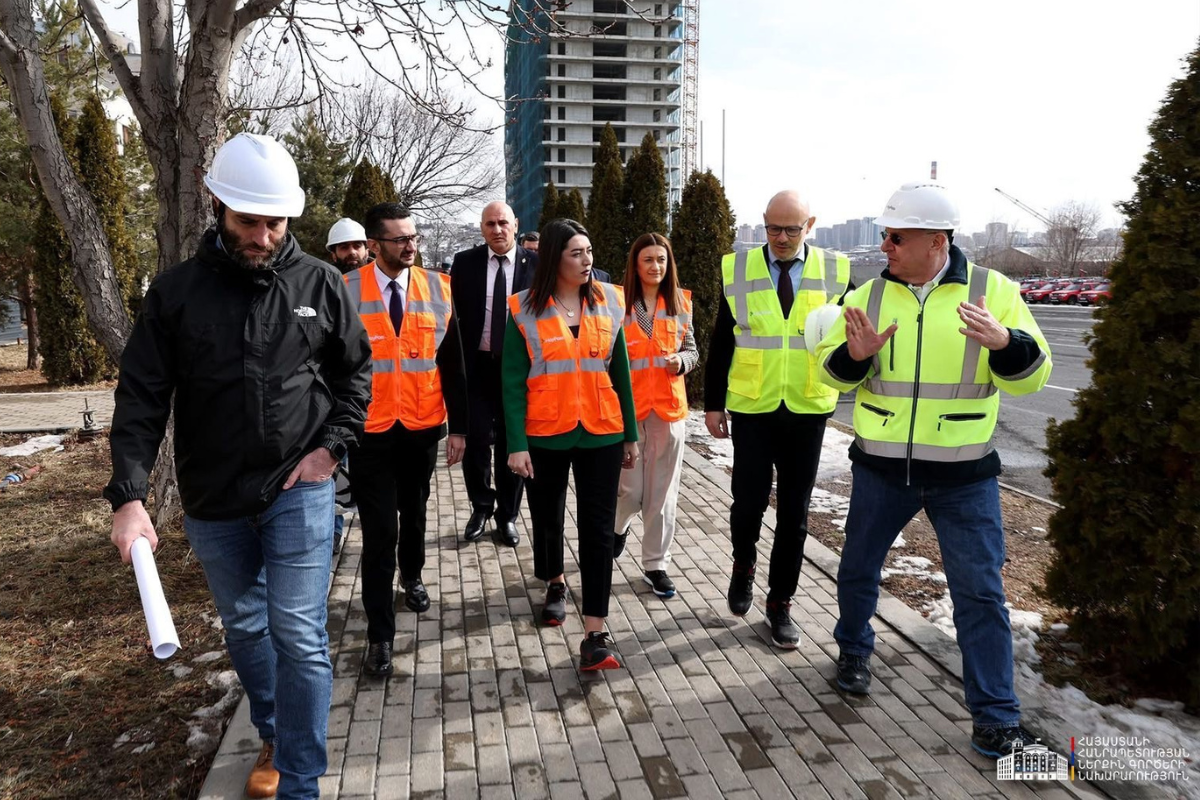
"Here architecture is heavy and closed; in Argentina, it is very light and open," he says.
At the same time, he emphasizes progress: Armenia has many good projects, and new ideas are constantly being brought from abroad. However, urban planning remains weak, lacking unified codes and structured zoning. He believes the solution lies in implementing proper regulations, creating green spaces, and expanding development toward the outskirts of cities, where new standards can be applied.
A new home, new concerns
Speaking more personally, as a father of three, Ari admits that after 15 years in Armenia, his concerns are no different from those of any Argentine living in Argentina: having a job, ensuring that his children receive a good upbringing, and living in safety.
The issues typical for Armenians in the Diaspora — such as preserving culture and language or fearing assimilation — are no longer part of his daily concerns. According to Ari, however, these issues still affect much of the Armenian diaspora in Argentina.
Author's reflections
As someone who lived in Russia for a long time and witnessed how quickly Armenians assimilated there — often losing their language and connection to Armenia — I have always been interested in understanding what allows some Diaspora communities to preserve their identity even into the fourth generation. I asked Ari this question. While his background as part of the Armenian professional class in Buenos Aires certainly played a role, our conversation extended to many others in the community who begin to lose their identity only in the fourth or fifth generation.
"After the Armenian Genocide, our grandparents undertook the very demanding mission of preserving Armenian identity: going to an Armenian school, marrying within your nation. That created a strong foundation for us as a Diaspora. We had clear boundaries — Armenians, Armenian language — but gradually even we are losing that. I have also changed after 15 years in Armenia: before, identity meant language, school, recognition of the Genocide. Here, it is different. There, advocating for Genocide recognition was a key expression of my Armenian identity; here, even without always realizing it, I am standing up to the Genocide by building up Armenia every day alongside every other Armenian here," he reflects.
Living like an ordinary person
Life in Armenia has become easier for Ari — those earlier struggles are gone. He can now live like an ordinary person and deal with everyday problems. The lightness he "inherited" from Argentine culture helps him greatly — in work and in communication, he approaches everything with humor and ease. In this sense, repatriates bring not only new architectural styles, but also new ways of communication.
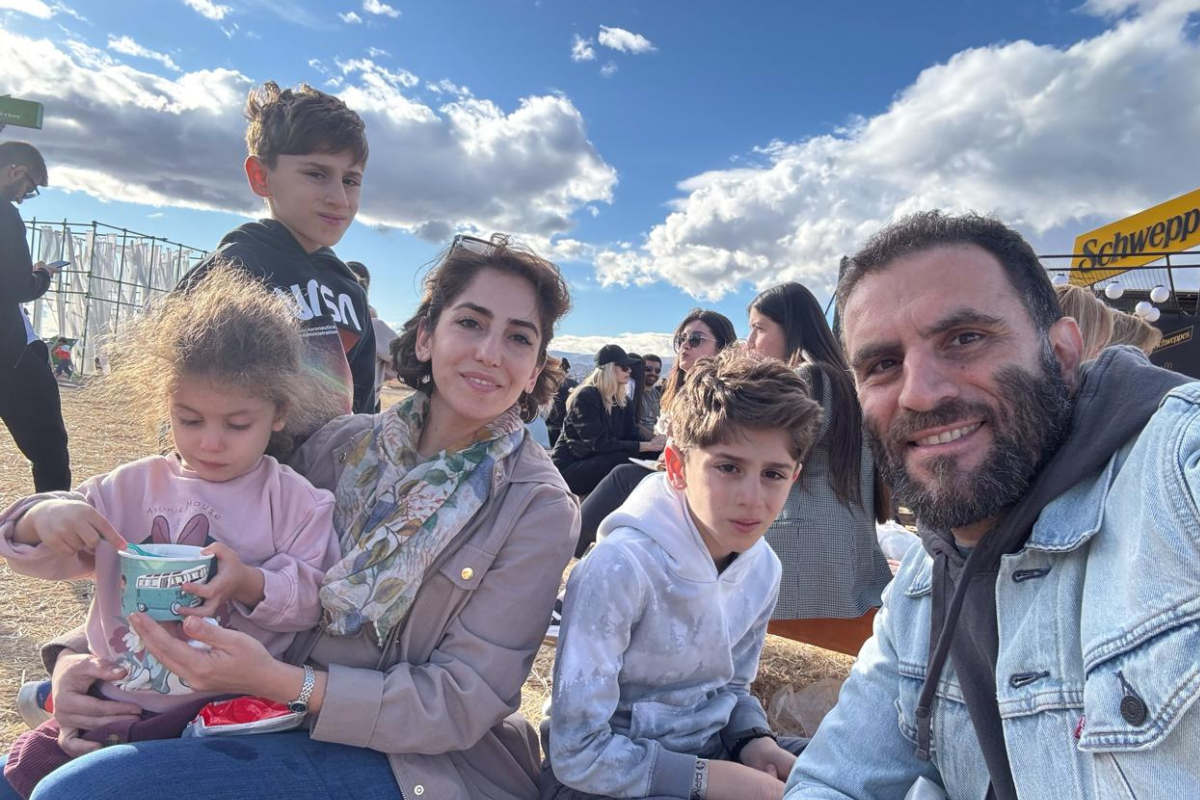
Last year, one of his sisters also moved to Armenia through the iGorts program.
"My father really wanted to move here — he longed for conversations about literature and history. Another sister also wants to come, but she has an important mission there: she and my mother are guardians of the Armenian language in Argentina. My brothers and another sister also want to move, but for various reasons cannot — yet. I would be incredibly happy if they were here, but I also want Western Armenian to survive, along with Armenian identity in the diaspora. After all, not everyone can move to Armenia and adapt to life here..."
Interview by Nare Bejanyan
Translation via AI based on the original article in Russian: "Жизнь без страха ассимиляции. Путь домой Ари Аджяна"

-
Practical Tips
-webp(85)-o(jpg).webp?token=2ff94e450d02bcf3df88f5793fc20a07 "Digital Nomad in Armenia 2026: A Step-by-Step Guide to Residence Permits for Remote Workers") 28.04.2026Digital Nomad in Armenia 2026: A Step-by-Step Guide to Residence Permits for Remote Workers
28.04.2026Digital Nomad in Armenia 2026: A Step-by-Step Guide to Residence Permits for Remote Workers -
News
-webp(85)-o(jpg).webp?token=e17605814ff8e8da72d528da379cb0cf "The Resilient Wound - An Armenian Genocide Story You’ve (Probably) Never Heard") 26.04.2026The Resilient Wound - An Armenian Genocide Story You’ve (Probably) Never Heard
26.04.2026The Resilient Wound - An Armenian Genocide Story You’ve (Probably) Never Heard -
Personal Stories
-webp(85)-o(png).webp?token=464a5aef32217c148d6bf1ee4e7772ba "Repats Without Restraints - A Conversation with Henrik Manukyan") 20.04.2026Repats Without Restraints - A Conversation with Henrik Manukyan
20.04.2026Repats Without Restraints - A Conversation with Henrik Manukyan
-webp(85)-o(png).webp?token=8517fc63f8330d51e4479bbb4d38a75d "Everyone Who Chooses to Be Armenian Must Be Here…")