My Experience

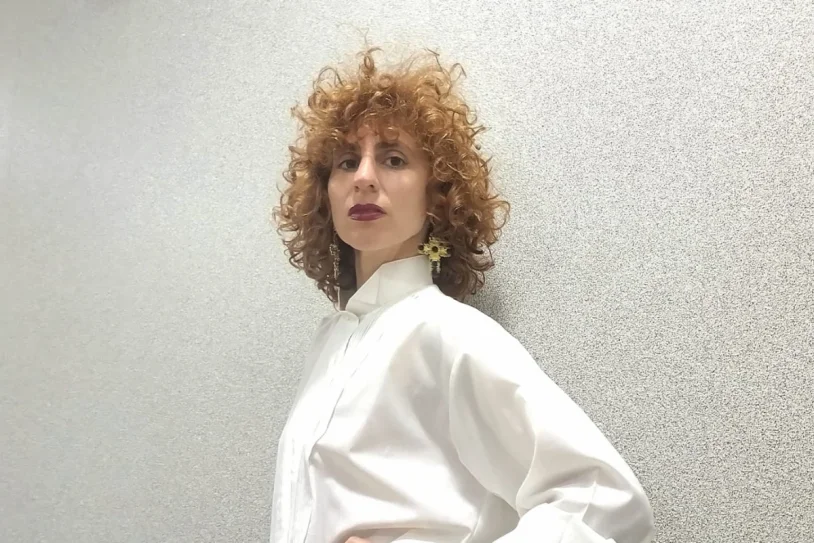
Some repatriation stories start with a plan. Piunik Keshishbanous’ started with a visit, a feeling, and a growing sense that Armenia was where she wanted to build her life.
Over the years, volunteering brought her closer to the country, science gave her a career path, and love connected two Armenian families from Iran and France.
Today, Piunik is building a life in the country not only as a biochemist and former Birthright Armenia volunteer, but also as a wife and mother, raising the next generation in a land both families chose to call home.
1. Your journey started with volunteering and eventually led to marriage, two families repatriating, and now raising a child in Armenia. Did you ever imagine one decision could lead to all of this?
I think it really started in 2014. I was part of a poetry recital group in Iran, and we travelled to Artsakh to take part in some performances. The whole experience was very inspiring, and after that I became much more involved with Armenia.
In 2015, I was part of a program in Aghveran focused on Armenian history, religion, and identity. Then came Ari Tun in 2016, where I was just a participant. The whole thing was so inspiring, I ended up coming back in 2017 as a group leader. By that point, Armenia had already become a big part of my life and I had already met my future husband. He and his family had already moved to Armenia more than a decade ago.
In 2020, I finally repatriated permanently, along with the rest of my family. I spent four months volunteering through Birthright Armenia. The first two months were almost entirely connected to Artsakh and the war.
At the time, I could never have imagined that all of this would eventually lead to marriage, my career, and now raising our child here.

2. You joined Birthright Armenia while your mother was doing AVC. What was it like reconnecting with Armenia together?
I was actually the one who encouraged my mother to volunteer. She was always curious about what I was doing, and wanted to learn more. Finally, I had her join AVC, and she became very involved in it. She still participates and keeps in touch with people from Artsakh, especially children, given her background as a teacher.
Now I’m trying to get my sister involved as well. So, in a way, reconnecting with Armenia became something that spread through the whole family rather than being only my personal journey.

3. You now work in 3D bioprinting and research materials for creating human tissue and organs. It’s such a novel thing to be a part of. Is the sector developed in Armenia, and how do you see it progressing?
It’s still a developing field in Armenia, and research and development naturally depend a lot on budgets, grants, and funding opportunities.
At the same time, there is real potential. I worked and volunteered in research with Foldink, looking for materials that can help make the bioprinting process more effective. Now I’m working as a medical/budget coder at Data Foundry. The field is still growing, but grants, awards, and new research opportunities can help it move forward.
4. During the war, you thought about developing artificial skin for soldiers with severe skin damage and also volunteered with displaced Artsakh Armenians. Did that period strengthen your decision to stay in Armenia?
Yes, definitely.
It was a very difficult time. There was chaos, we lost friends, and I spoke with soldiers who had returned from the war. I also met displaced Artsakh Armenians in Vayots Dzor and joined other volunteers helping families, including collecting fruit and providing whatever support we could.
Because of my background in biochemistry and bioprinting, I also started thinking about how artificial skin could potentially help soldiers with severe burns.
The war didn’t make me want to leave. In a strange way, it made me feel even more strongly that I needed to stay. It showed me the challenges Armenia faces and how much work there is to do.
Thankfully, with the amount of progress we’ve had in the industry, we’re ready for similar scenarios, even though I hope we never have to go through this again.
5. You’ve said that Armenia helped you discover new capabilities in yourself. What did you learn about yourself after moving here?
I always thought of myself as an introvert. In Iran, Armenians don’t always openly engage with non-Armenians, so we tend to be a bit more introverted. But, after moving to Armenia I discovered a much more extroverted side of myself.
Volunteering, meeting new people, working with different communities, and constantly finding myself in unfamiliar situations made me realize I was capable of much more than I thought.
I also saw how willing people here can be to help one another, and that encouraged me to become more involved myself.

6. Speaking of Iran, and the diaspora in general, many think that diaspora Armenians are raised with a “pink glass” attitude toward Armenia. We sometimes tend to ignore the intricates of local Armenian culture and some of us become disappointed at times. How did this aspect of you affect your experience in Armenia?
I’m probably one of the few diaspora Armenians whose pink glasses didn’t shatter after moving. The opposite, actually. Armenia became warmer and warmer by the day. Yes, I understand the unique aspects of the post-Soviet Armenian culture, but I don’t have a negative attitude toward them because I understand where they come from.
I try to encourage my fellow diasporans to have a similar mindset when it comes to moving to Armenia. The culture is definitely different, but different doesn’t always have to be negative.
7. As a diasporan who happens to have a strange last name like yours (Abedi Masihi), how many times have people asked you about your last name?
Many! And it’s not just the last name. Piunik is a rare name in Armenia, even though it’s not that uncommon in Iran.
They’ll first look at my name, then see my last name, and always go: “Are you Armenian?”
And I have to explain that Keshish means priest, and Banous comes from the name Panos. So, Panos was a priest in Iran from whom we get our last name. It’s a common conversation, but a fun one to engage in every time.
6. Now that you and your husband are raising your child in Armenia, what do you hope they will one day understand about your families’ decision to repatriate?
I hope our child understands that moving to Armenia was a conscious choice for both of our families.
We came from different countries and different experiences, but we both chose to build our lives here. I would like our child to understand that Armenia was not simply where we ended up. It was a place we actively chose to make our home and contribute to.
7. Between Iran, France, Armenia, science, volunteering, and two repatriated families, your child already has quite a family story. Which part of that story do you think you will enjoy telling them the most when they are older?
Probably the story of 2020.
It was such a difficult and important year in my life. There was the war, volunteering, meeting people from Artsakh, losing friends, and seeing firsthand what people were going through.
At the same time, it was also the year I finally moved to Armenia permanently and became much more certain about the life I wanted to build here.
It was a painful period, but it shaped so much of what came afterwards. I want our son to know that despite the hardships, we’ve never thought of leaving. Even though we have the chance to build our life elsewhere, we have no intention of ever doing so.

Interview by Nareg Abedi Masihi

-
Personal Stories
 22.06.2026Elena, Who Sings Komitas, the Armenian National Anthem, and Russian Folklore
-
Personal Stories
 27.05.2026Repats Without Restraints - Getting Philosophical with Karapet "Karo" Sahakyan